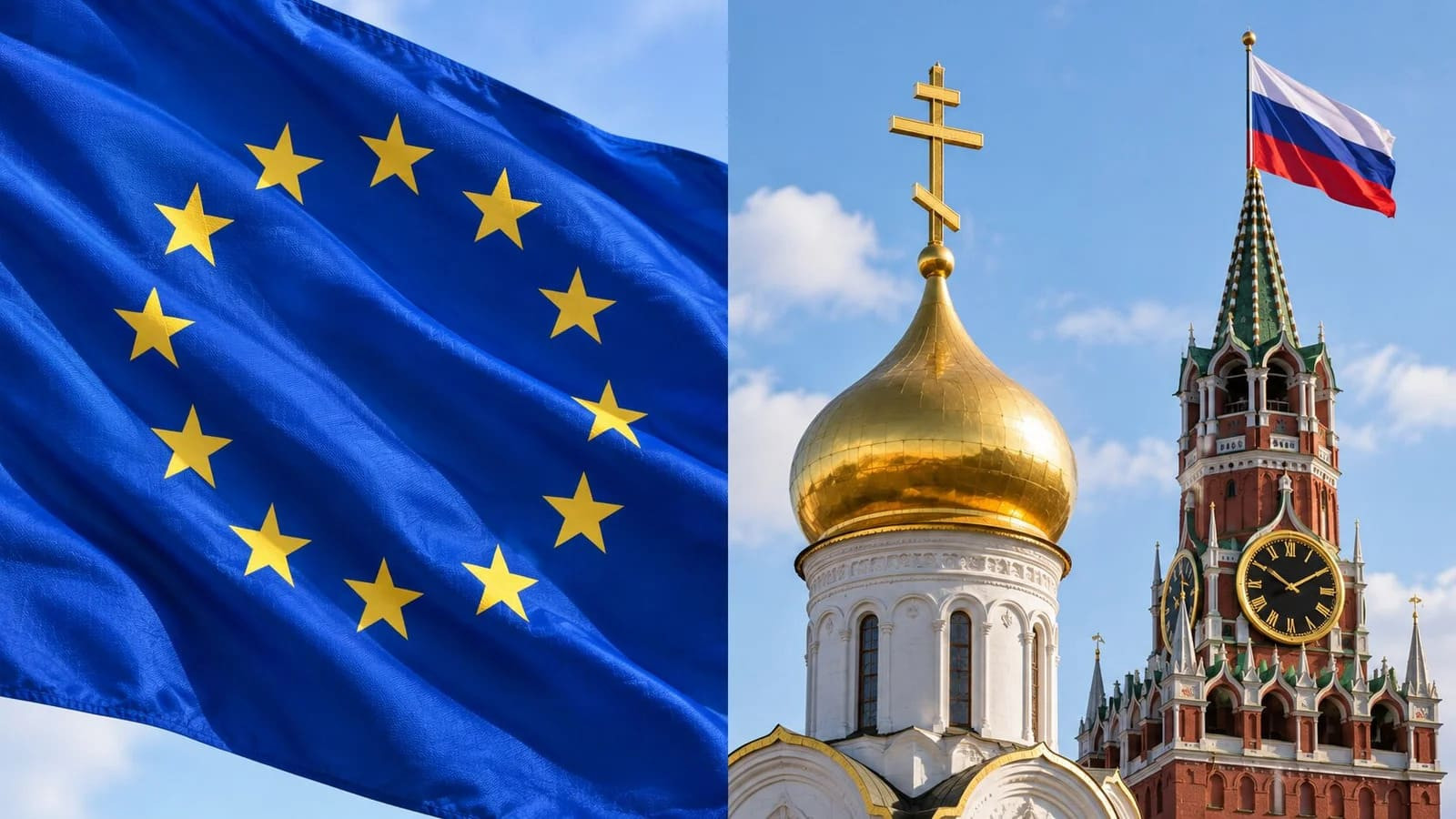
On October 14, 2026, a press conference was held in Vilnius, Lithuania, to present an analytical study entitled “The Use of Religion as a Tool of Influence on the Security of Lithuania and Europe in the Context of Russian Military Aggression.” The event also marked the official launch of the International Center for the Study of Religious Freedom, Libertas Fidei.
The press conference was attended by Ingrida Šimonytė, a member of the Lithuanian Seimas and former Prime Minister of Lithuania; Vytautas Bruveris, a political commentator and Chairman of the Board of Libertas Fidei; and Dr. Serhii Shumylo, a church historian, religious studies scholar, Senior Research Fellow at the Faculty of History of Vilnius University, and Executive Director of Libertas Fidei.
During the press conference, it was noted that approximately 670–700 parishes of the Moscow Patriarchate operate within the European Union. When affiliated foundations, schools, cultural centers, and other organizations are included, the total number exceeds 1,000. Religious structures may be used by Russia to spread political influence, propaganda, and disinformation, and their activities must also be examined in the context of national security.
Participants discussed the use of the Russian Orthodox Church's international network to spread the Kremlin's political and ideological influence, the associated hybrid threats to the security of Lithuania, the Baltic states, and Europe as a whole, as well as the role of the Russian Orthodox Church in justifying the war against Ukraine and promoting the neo-imperial, quasi-religious ideology of the “Russian World” (Russkiy Mir).
The study highlights the need for a more systematic examination of how authoritarian states use religious institutions as instruments of political influence, propaganda, and interference in the internal affairs of other countries. The authors also pay particular attention to identifying approaches that would enable democratic states to counter such threats while safeguarding freedom of conscience and religion.
A key issue highlighted by the study's participants is the need to distinguish between legitimate religious activities and cases in which religious organizations are used to advance the political interests of foreign states. Making this distinction is essential both for the national security of European countries and for the protection of believers' rights.
It should be recalled that Ukrainian churches and religious organizations have repeatedly condemned Russia's military aggression against Ukraine and the quasi-religious ideology of the “Russian World”, including in the Appeal of the Christian Churches of Ukraine Condemning the Aggressive Ideology of the “Russian World.”